The Issaquah owner's handbook
The Pre-Holiday Load Check
Regimen checked byDean HalvorsenTradeRefrigeration technician — sealed systems and airflowHoldsEPA 608 certifiedDated
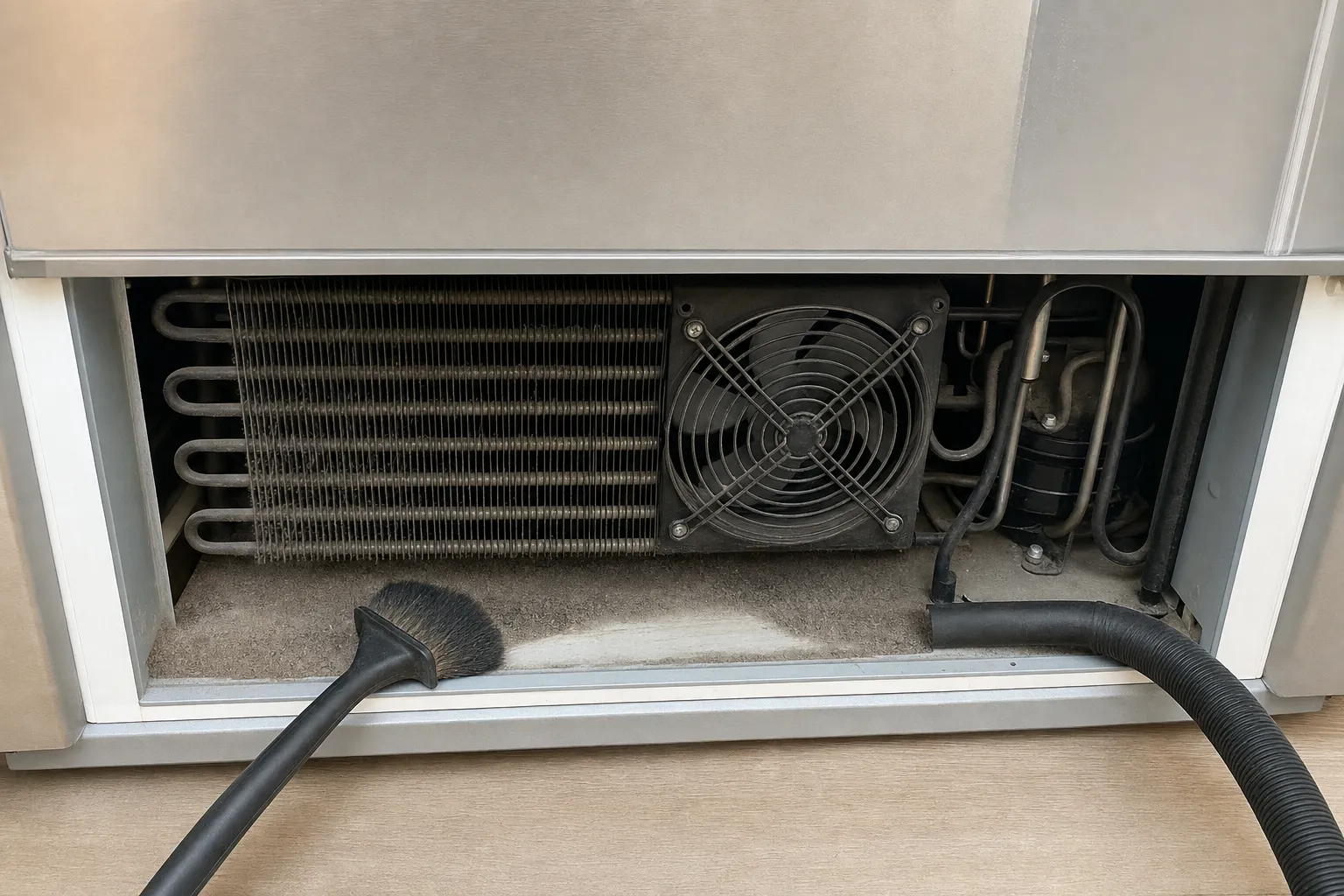
- 1Condenser coil
- 2Condenser fan
- 3Compressor
- 4Dust on the bay floor
| Check | When | Threshold | What to do |
|---|---|---|---|
| Condenser coil | 7 days before the shop | Lint showing behind the grille or kickplate | Clean it now so the unit settles before it fills |
| Settings | 7 days before the shop | Not at the setting you normally use | Reset it; Classic presets are 38°F and 0°F |
| Doors and drawers | Each evening that week | A door that drifts open or will not seat | Clear what is in the way; a torn seal is a repair |
| The kitchen | On the day of the shop | Room under 60°F or over 90°F | Bring the room back into range |
| Shelf reading | The morning after loading | Well above your setpoint and still rising | Check the coil and doors again, then call |
| Call when | the shelves stay above the setpoint through the day after the groceries went in, with the coil clean and the doors closing. Sub-Zero Repair Issaquah, (425) 272-6613 | ||
Work down the table the week before the shop, so anything it turns up can be dealt with while the kitchen is quiet.
Why a full load tests the unit
A holiday shop changes a great deal at once: groceries at room temperature, dishes put away before they have cooled, and doors opened far more often while a crowded kitchen cooks. Each is heat the unit has to carry out through the condenser. A coil furred with lint, a door that does not quite close or a hot kitchen slows that work; Sub-Zero’s troubleshooting for a unit that runs too long names all three.
The checks, the week before
Clean the condenser if it is near due, with the power off at the control panel. Make sure the controls show the settings you normally use; if nobody has touched a Classic unit’s controls, it still holds the factory numbers, 38°F for fresh food and 0°F for frozen. Close each door and drawer gently and watch it seat on its own. A door that bounces back usually has a jar behind it; a torn or flattened seal is a repair.
Loading day
Let hot dishes cool before they go in, and spread new food across the shelves instead of packing it against the back wall, so cold air can still move around it. A warm kitchen while the oven runs is normal; a room outside 60°F to 90°F, such as an unheated lower level holding an extra unit, is not.
The morning after
Read a thermometer on a middle shelf before breakfast. A little above the setpoint is expected while new food cools; a reading that keeps climbing, or a unit that ran all night without a pause, is the table’s last row. If the coil and doors still check out, call Sub-Zero Repair Issaquah at (425) 272-6613; the $89 service call comes off the repair if you go ahead.
Owners also ask
Should I turn the temperature down before a big shop?
Sub-Zero's guides tie performance to a clean condenser, doors that close and a room within range, not to a colder setting, so keep your usual settings and spend the effort on those three. If a clean, well-sealed unit still cannot hold its setpoint once full, call Sub-Zero Repair Issaquah on (425) 272-6613.
Why check the room temperature at all?
Sub-Zero designs its indoor units for a room between 60°F and 90°F. A spare unit in a cold garage, or a kitchen shut up for hours with the oven running, can sit outside that range, and the manufacturer notes that no repair can correct performance until the room returns to it.
How far ahead should the condenser be cleaned?
Give it several days. After a cleaning, temperatures can take up to 24 hours to return to the setpoint, and doing it a week ahead leaves time to notice a unit that does not recover before the shelves are full. A unit that stays warm after that needs a call, not more food.